
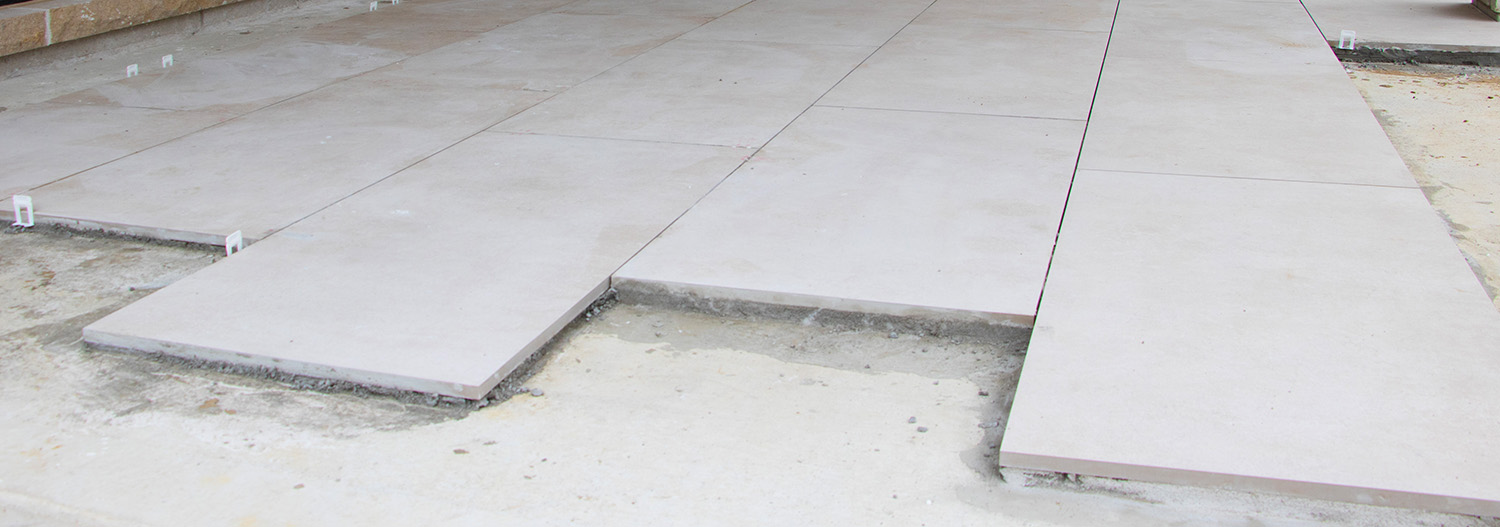
Outdoor porcelain pavers are engineered for exceptional durability, low maintenance, and long-term performance. However, even the highest-quality porcelain can underperform if it is not installed correctly. Here are 10 common mistakes to avoid for a successful installation.
1. Improper Base Preparation
A stable, well-compacted base is the foundation of every successful installation. An uneven or poorly prepared base can lead to settlement and movement over time.
2. Poor Drainage
Ensure the installation has the proper slope and drainage. Standing water beneath the pavers can compromise the stability and longevity of the installation.
3. Using the Wrong Adhesive
For mortar-set installations, always use an exterior-rated, polymer-modified adhesive recommended for outdoor porcelain pavers.
4. Incorrect Jointing Material
Choose the appropriate jointing material based on the installation method. Proper jointing helps prevent weed growth, erosion, and joint deterioration.
5. Not Using Spacers for Dry-Lay Installations
Porcelain pavers should never be installed tightly against one another.
Maintain a minimum 3 mm joint and always use spacers for dry-lay installations. Spacers ensure consistent joint widths and help prevent edge chipping caused by slight movement of the pavers over time.
6. Not Managing Planarity
Large-format porcelain pavers require careful attention to planarity to achieve a smooth, professional finish.
To minimize lippage:
- Lay tiles in a 1/3 or 1/4 offset pattern rather than a 50% brick pattern.
- Use self-levelling spacer systems where appropriate to help maintain a level surface and consistent alignment.
7. Using the Wrong Blade for Cutting
Using the wrong blade can result in chipped edges and poor-quality cuts.
For clean, precise cuts, always use a continuous rim (non-segmented) diamond blade specifically designed for porcelain. For the best results, we recommend using the Banas Porcelain Blade, engineered to deliver smooth, accurate cuts while minimizing edge chipping.
8. Incorrect Pedestal Installation
When using pedestal systems, ensure proper pedestal spacing, height adjustment, and edge support by following the manufacturer’s recommendations.
9. Missing Edge Restraints
Edge restraints are essential for dry-lay installations to prevent movement and maintain the integrity of the paved area over time.
10. Overlooking Manufacturer Installation Guidelines
Every porcelain collection and installation system has specific recommendations regarding installation methods, joint widths, adhesives, and pedestal spacing. Always follow the manufacturer’s installation guidelines for the best long-term performance.
Common Mistakes at a Glance
| Mistake | Best Practice |
|---|---|
| Improper base | Prepare and compact the base correctly. |
| Poor drainage | Ensure proper slope and water drainage. |
| Wrong adhesive | Use an exterior-rated polymer-modified adhesive. |
| Incorrect jointing material | Use the recommended jointing product. |
| No spacers for dry-lay installations | Maintain a minimum 3 mm joint and always use spacers. |
| Poor planarity | Use a 1/3 or 1/4 offset pattern and self-levelling spacers where required. |
| Wrong cutting blade | Use a continuous rim (non-segmented) diamond blade, such as the Banas Porcelain Blade. |
| Incorrect pedestal installation | Follow the pedestal manufacturer’s guidelines. |
| Missing edge restraints | Install proper edge restraints. |
| Ignoring manufacturer guidelines | Follow all recommended installation instructions. |
Final Thoughts
Proper installation is essential to maximize the performance and lifespan of outdoor porcelain pavers. By following recommended installation practices and avoiding these common mistakes, you’ll ensure a durable, attractive, and long-lasting outdoor space.
At Banas Porcelain, we offer premium 20 mm outdoor porcelain, expert technical support, professional installation guidance, and specialized tools to help contractors and homeowners achieve outstanding results.